
By Murat YILDIZ
For decades, Cyprus understood its security through the idea of the "Motherland." Since 1974, Greece functioned as a psychological reference point and a strategic fallback. New budget figures for 2026 and a recent state backed poll now suggest that this reference point is quietly shifting.
For many Cypriots, this shift is increasingly framed in practical terms. The question is no longer about identity or tradition, but whether the long standing "Motherland" doctrine is being replaced by a new security insurance built around Israeli air and missile defense.
Under the 2026 defense budget, in force since 1 January 2026, Cyprus is preparing for a record €176.8 million increase in arms spending, alongside a sharp rise in defense imports. At the same time, a poll released by the state broadcaster CyBC (RIK) in late 2025 indicates a clear change in how the public assesses security partners.
From historical ties to practical protection
The results are clear. Support for Israel as Cyprus's most reliable defense partner has risen from 9.5 percent in 2024 to 41 percent today. Over the same period, reliance on Greece has fallen from 45 percent to 27 percent. This is not a rejection of history. It reflects a reassessment of what actually works in a modern security environment.
Procurement decisions reinforce that view. Cyprus's total military spending has reached an estimated €553 million, the highest level on record. While small-arms imports from Greece and Italy remain largely unchanged, data from the Stockholm International Peace Research Institute (SIPRI) show a 945 percent increase in major weapons imports since 2021.
The shift is less about quantity than logic. Cyprus is moving away from heavy, platform centered systems toward a digital defense model built around sensors, interception, and layered air defense. In practical terms, Cyprus is no longer investing in legacy or symbolism. It is buying security, weighing cost against coverage, and prioritizing systems that deliver protection rather than inheritance.
The arrival of the Israeli made Barak MX air and missile defense system, designed to counter ballistic missiles, cruise missiles, and unmanned aerial threats, has become central to public discussion. It offers something tangible: protection that can be seen, measured, and deployed locally. This shift has also been enabled by a structural change. The lifting of the United States arms embargo removed a long standing constraint, opening the way for deeper cooperation with Israel and France.
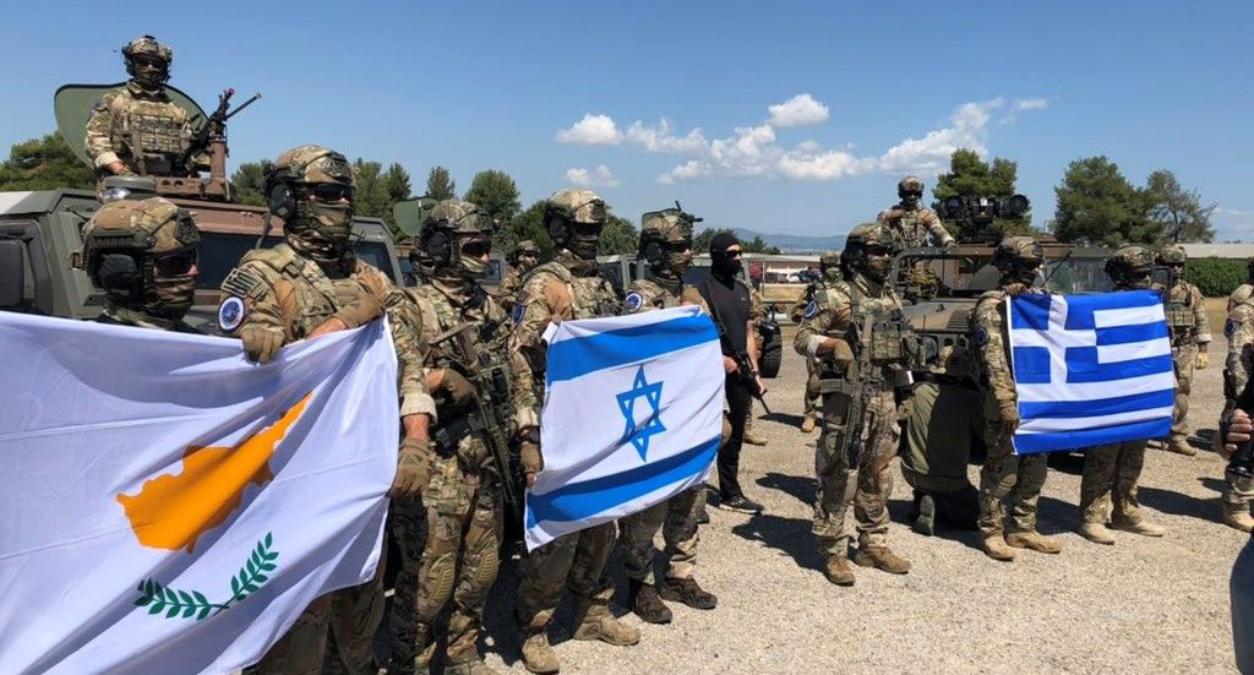
Importantly, this recalibration does not amount to a rejection of Greece. Seventy-one percent of respondents still consider the Cyprus–Greece–Israel trilateral framework beneficial. But public expectations are increasingly shaped by proximity and response time. In a region marked by uncertainty, distance matters.
This is not a turn away from Athens. It is confirmation that instability leaves no space for emotion. Cypriots are no longer weighing brotherhood, but response time.
Public sentiment reflects this mood. Many respondents describe their outlook in terms of anxiety or frustration. The sentiment captured in the poll points to a deeper shift. Rather than seeking reassurance, a growing segment of the public appears ready to act as a pragmatic buyer, willing to pay for the most effective shield available.
The picture that emerges is straightforward. Historical bonds remain important. But when it comes to defense, public confidence is shifting toward what protects, not what reassures.