

Türkiye's transport and infrastructure policy is not failing because of insufficient activity. It is failing because policy coherence has weakened.
The Transport and Infrastructure section of the parliamentary budget report points to a recurring problem: investment decisions are not anchored in a clear strategic hierarchy. Infrastructure is handled as a series of individual projects rather than as a system that shapes productivity, access, and long-term economic capacity.
This matters because infrastructure choices are cumulative. Once locked in, they define constraints for decades.
Digital infrastructure remains structurally weak
The most exposed vulnerability is digital connectivity. Internet access remains costly, fiber coverage is limited, and regional disparities persist. These are not transitional gaps. They indicate a structural shortfall.
Digital networks are still governed primarily through market logic, with limited public steering. The result is a familiar pattern: high end-user costs combined with insufficient network depth. This weakens competitiveness across logistics, services, manufacturing, and remote work.
The absence of a nationwide fiber deployment framework signals that digital infrastructure is still not treated as a core public utility.
Transport planning without system integration
A second weakness lies in the lack of an integrated transport framework. Projects are presented individually, but their interaction is rarely addressed.
Urban transport, intercity mobility, and freight corridors operate on parallel tracks. Links between transport planning, urban growth, and industrial geography remain thin. This raises system-wide costs and reduces efficiency, even when headline investment figures appear substantial.
Without a binding national transport plan, infrastructure policy remains fragmented and reactive.
Railways remain peripheral by design
Despite repeated references to rail, the report shows that rail transport continues to play a secondary role in both freight and passenger movement. Road-centric planning still dominates capacity allocation.
This is not merely a modal preference. It shapes energy dependence, logistics costs, and environmental exposure. Rail is treated as an adjunct rather than as a backbone.
The constraint is not technical feasibility. It is the absence of sustained prioritisation.
Maritime and port policy lacks strategic linkage
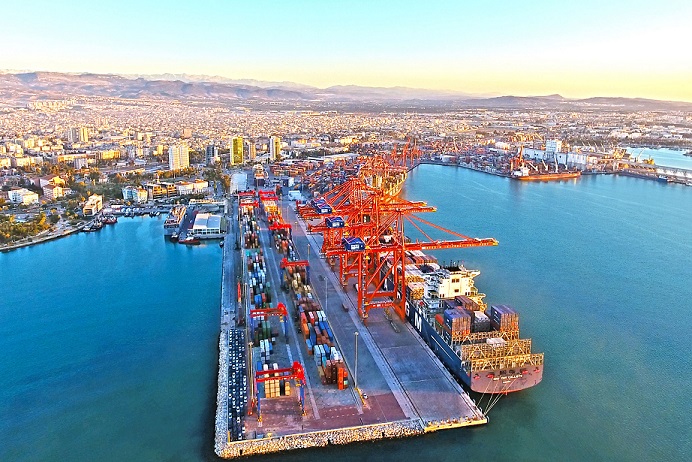
Türkiye's geographic position offers clear advantages in maritime transport and port-based logistics. Yet the report reflects a lack of strategic alignment.
Ports are insufficiently integrated into export strategies, industrial planning, and regional development frameworks. As a result, maritime transport underperforms relative to its potential role in lowering trade costs and strengthening supply chains.
Here again, the issue is coordination rather than capacity.
Investment discipline and long-term exposure
The report also points to growing long-term obligations associated with large transport projects. While individual investments are justified on a case-by-case basis, their cumulative fiscal and economic effects are not assessed with sufficient transparency.
This weakens investment discipline and limits flexibility over time. Infrastructure choices become harder to correct once conditions change.
What the pattern reveals
Across digital networks, transport modes, and logistics, the same pattern appears. Policy emphasis has shifted from system design to project delivery.
Infrastructure policy, however, is not neutral. Poorly aligned systems do not simply underperform; they constrain future choices.
The central issue is no longer whether Türkiye can build infrastructure. It is whether it can set priorities, integrate networks, and align investment with long-term economic needs.
Until that shift occurs, infrastructure will continue to absorb resources without delivering proportional gains in productivity or resilience.