
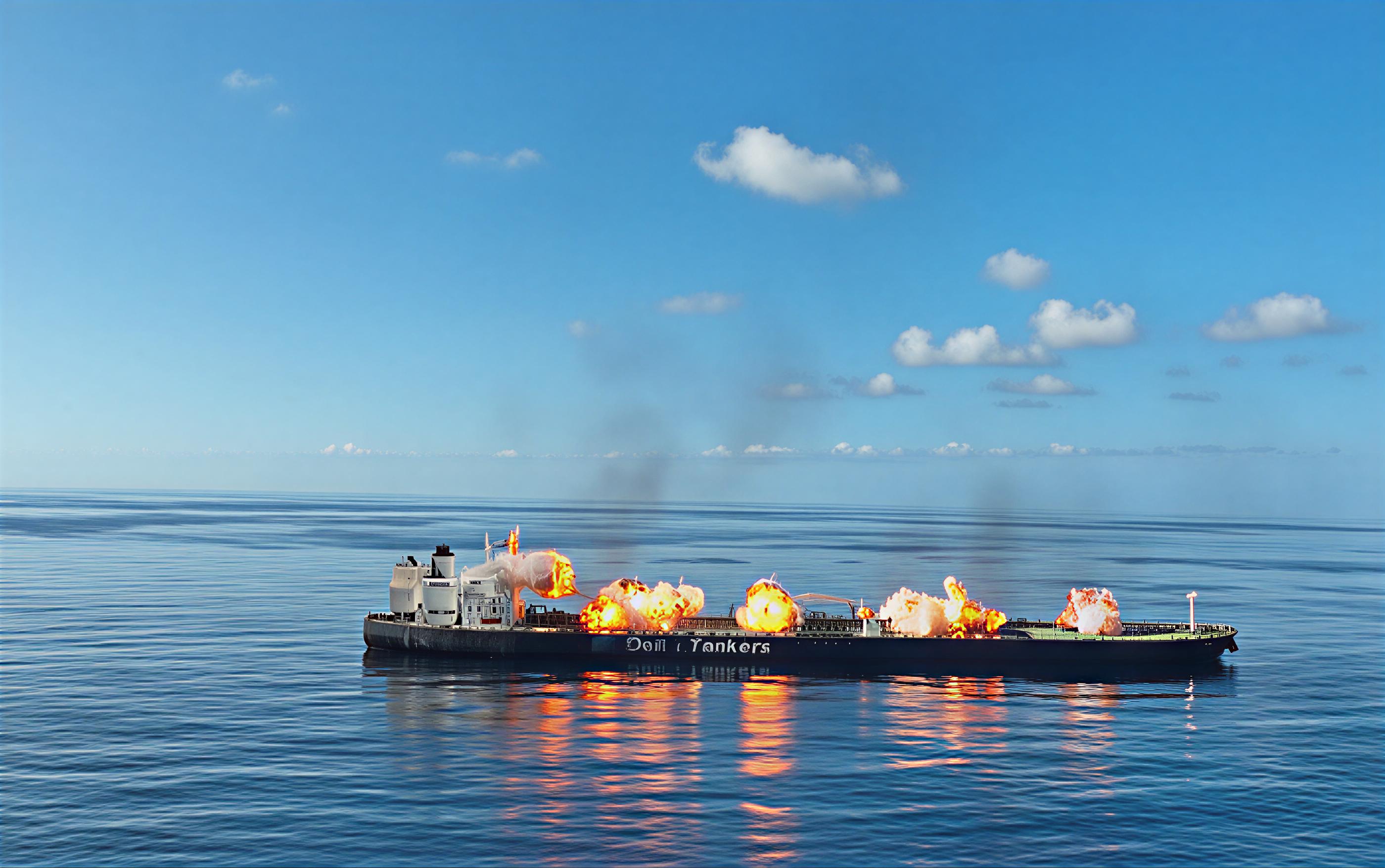
The relative stability of the critical Black Sea shipping routes shattered late Thursday night as two oil-laden commercial vessels suffered catastrophic, near-simultaneous explosions. The incident, which unfolded some 30 nautical miles off Türkiye's northern coast, has placed maritime security in the region on a knife's edge and exposed the perilous reality of clandestine, wartime oil transport.
Official statements from Turkish maritime authorities confirmed the disaster, attributing the cause only to an "external impact." This ambiguous assessment has fueled urgent speculation among security analysts: was the destruction caused by a drifting naval mine, or does this represent a direct, targeted attack by a maritime drone or projectile against Moscow's vital economic pipeline?
The Escalation Was Forecasted
For observers closely tracking the volatility in this strategic waterway, the severity of Thursday's dual strike was tragically predictable. Just days prior, BosphorusNews alerted readers to the dangerous operational climate with an article titled Russian Cruise Ship blocked in 'Reciprocity' Move, Signaling Black Sea Tensions. The recent reciprocal maneuvers and increasing confrontation had already signaled that the era of unchallenged, sanctions-evading transit was rapidly concluding, setting the stage for the catastrophic events that followed.
The Anatomy of the Shadow Fleet Disaster
The vessels involved, the Kairos and the Virat, are not standard commercial ships; they are indispensable links in Russia's notorious "Shadow Fleet"—an ad-hoc armada assembled to bypass Western sanctions and finance the ongoing conflict.
The Kairos, a Suezmax tanker sanctioned by the UK and the EU, was reportedly empty and en route to load crude at Russia's Novorossiysk terminal. After the explosion, the enormous vessel began taking on water and faced a high probability of sinking. The Virat, also sanctioned by Western nations, reported a heavy strike nearby, with dense smoke engulfing its engine room.
The response from Turkish maritime agencies was decisive. The Turkish Coast Guard and supporting vessels, including the specialized Nene Hatun emergency ship, launched an immediate rescue effort. The timely intervention proved successful, safely evacuating all 45 crew members (25 from the Kairos and 20 from the Virat) and narrowly averting a major humanitarian tragedy.
Unregulated Risk: The Data Behind the Danger
The peril embodied by the Shadow Fleet is systematic and severe. This network is believed to consist of anywhere from 600 to 1,400 tankers—a staggering figure representing up to 17 percent of the entire global oil tanker fleet.
The danger is rooted in calculated neglect. These aging vessels operate with minimal or fraudulent insurance, deliberately skipping critical safety inspections. They use tactics like switching off their Automatic Identification Systems (AIS) and engaging in hazardous ship-to-ship transfers in open water to conceal the origin of their cargo, often bound for markets like India and China.
The data confirms the threat: this double explosion is not an isolated incident. Since the onset of the war, experts have documented over 50 operational incidents involving Shadow Fleet tankers globally.
For littoral states like Türkiye, the unregulated passage of these vessels poses an existential environmental threat. A major spill in the crowded Black Sea from one of these damaged, uninsured behemoths would unleash an ecological disaster that could last for generations.
As salvage teams fight to contain the damage and prevent the sinking of the Kairos, the world is left with the stark realization: the escalation to this new, violent phase of economic warfare guarantees profound and escalating risks to global maritime safety and the environment.