
By Bosphorus News Economy Desk
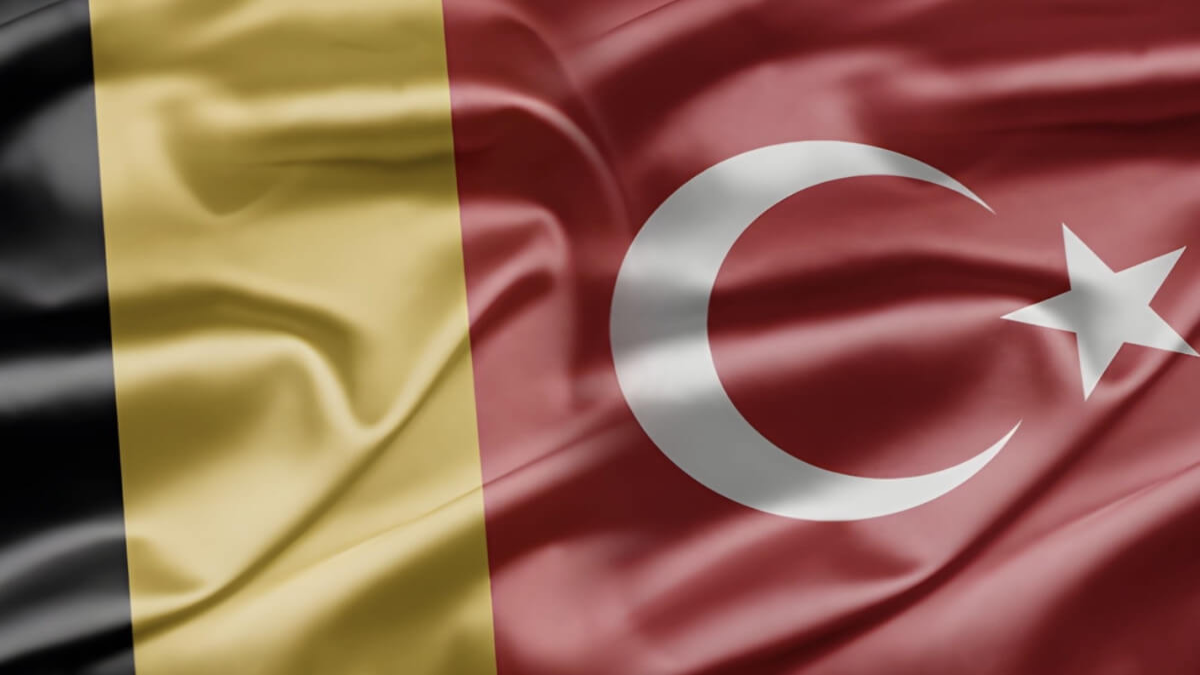
Belgium is sending a 428 member economic mission to Türkiye from May 10 to 14, in one of the largest European business delegations to visit the country in recent years.
The mission will be led by Queen Mathilde and will include Belgian Foreign Minister Maxime Prévot, Defense and Foreign Trade Minister Theo Francken, senior representatives from Belgium's regional governments and more than 400 private sector participants.
The program will begin in Istanbul and continue in Ankara, with Belgian companies seeking new cooperation in defense, green energy, logistics, healthcare, digital technologies and innovation.
Belgium's Foreign Ministry said the mission includes 194 companies, 17 federations and chambers of commerce, eight universities and several public institutions. The visit is being organised by Belgium's Foreign Ministry, the Belgian Foreign Trade Agency and the country's three regional investment agencies.
The scale of the delegation gives the visit a wider meaning than a routine trade mission. It comes as European companies reassess supply chains, regional production bases and access to nearby growth markets, while Türkiye seeks to strengthen its role as a manufacturing, logistics and technology hub between Europe, the Middle East, Central Asia and the Black Sea region.
"The world has changed. Our companies must be present where the opportunities lie, and today those opportunities also lie in Türkiye," Prévot said in the Belgian Foreign Ministry's announcement.
Belgium framed Türkiye as a market of 85 million consumers, a NATO ally, a country linked to the European Union through the customs union and an economy undergoing rapid transformation. That combination places the mission at the intersection of trade, security and industrial policy.
Türkiye's Foreign Ministry said Queen Mathilde would be accompanied by Prévot, Francken, regional government officials and more than 400 representatives from the private sector. The ministry said the mission would focus on expanding economic and commercial relations between the two countries.
Defense is one of the most sensitive areas in the program. Belgium's inclusion of its defense and foreign trade minister underlines how European commercial missions are increasingly shaped by the continent's security debate, supply chain concerns and the search for new industrial partnerships.
Green transition and logistics are also central to the visit. Türkiye's position near European, Black Sea, Caucasus, Middle Eastern and Gulf routes makes transport and industrial infrastructure a natural part of the agenda, while energy transition projects offer Belgian companies a route into Türkiye's growing clean technology and grid modernisation needs.
Healthcare and digitalisation add another layer. Belgian firms and universities are expected to use the mission to build contacts in medical technology, life sciences, research cooperation and digital services, areas where Türkiye is trying to draw more foreign investment and high value partnerships.
Trade data gives the visit a concrete economic base. Belgian media reported that Belgium exported 6.5 billion euros in goods and services to Türkiye in 2025 and imported 5.6 billion euros from Türkiye. That makes Türkiye one of Belgium's significant non-EU commercial partners.
The timing also matters for Ankara. The mission follows Türkiye's own investment reform push, including proposed incentives for regional headquarters, transit trade, service exports and foreign-sourced income through Istanbul Finance Center. For European companies, those measures are meant to make Türkiye more attractive as a regional base rather than only as an export destination.
The visit does not guarantee major agreements on its own. Its importance lies in the size of the delegation and the sectors chosen. Belgium is bringing companies, universities, regional authorities and federal ministers into the same program, while Türkiye is trying to position itself as a higher value partner for European industry.
The practical test will come after the mission, through signed deals, follow-up investment decisions and whether Belgian companies turn exploratory contacts into long-term operations in Türkiye. For now, the message from Brussels is clear enough: Türkiye is back on the map as a major business target for Belgian firms looking beyond the EU's internal market.
***Sources: Belgium Foreign Ministry, Türkiye Foreign Ministry, Belgian Foreign Trade Agency, Anadolu Agency, Belga News Agency.