
By Bosphorus News Geopolitics Desk
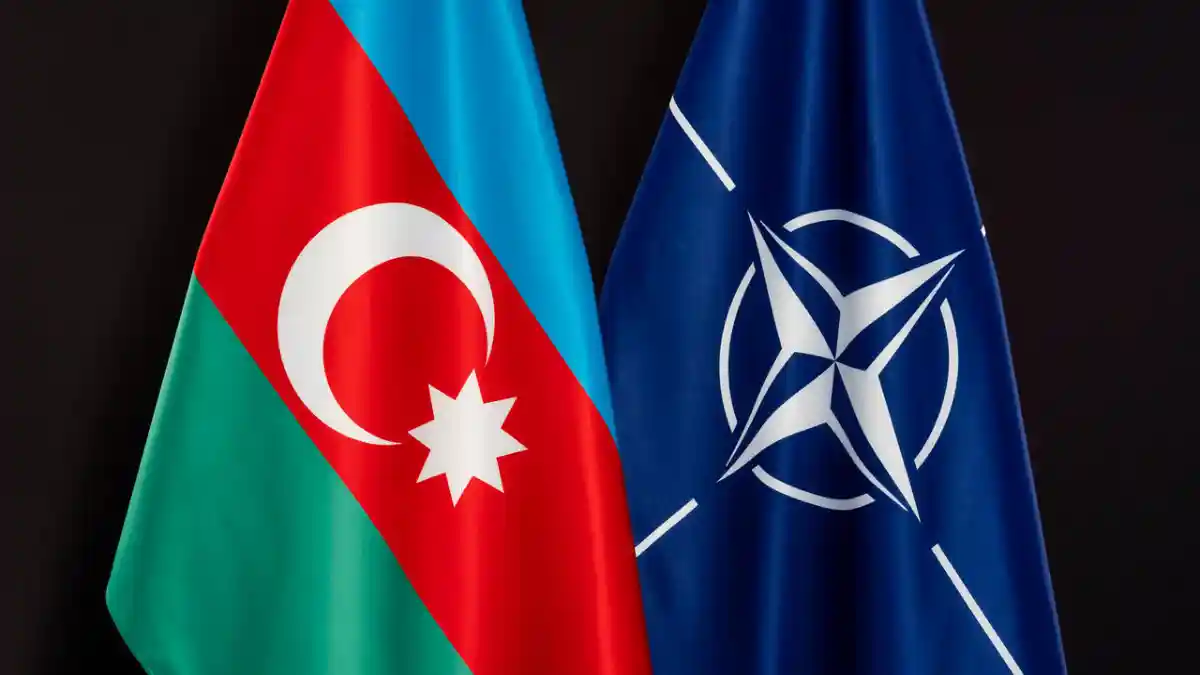
Azerbaijan is building a defence and connectivity profile that does not fit neatly into one institutional box. Baku is not a NATO member, but it continues to modernise parts of its military education system through NATO-linked standards. At the same time, it is pushing deeper defence coordination inside the Organization of Turkic States (OTS) and positioning itself as a Caspian bridge for energy routes linking Central Asia to Europe.
The latest official marker came from NATO. In an April 13, 2026 statement, the Alliance said representatives from its Defence and Security Cooperation Directorate visited Baku from March 31 to April 2 to review Azerbaijan's defence education reform efforts under the Defence Education Enhancement Programme, or DEEP. The meetings were held with the leadership of Azerbaijan's National Defence University and its affiliated military education institutions.
NATO said the programme would continue to support faculty and curriculum development at the request of Azerbaijan's Ministry of Defence. It also pointed to work on English-language training and testing standards, e-learning capacity and the development of the non-commissioned officer corps, a core element in NATO-style professional military education.
The wording is technical, but the political meaning is clear enough. Azerbaijan is not moving toward NATO membership. It is, however, using NATO frameworks to modernise military education, professional standards and institutional capacity.
That track is not new. NATO's own country profile says DEEP support for Azerbaijan began in 2008 and aims to integrate NATO standards into professional military education through teaching methodology and curriculum development. The April 2026 visit shows that the process remains active after the post-Karabakh security environment and after the 2025 peace declaration reshaped Baku's regional position.
The second track runs through the Turkic world. At the Organization of Turkic States summit in Gabala on Oct. 7, 2025, President Ilham Aliyev proposed holding joint military exercises for OTS member states in Azerbaijan in 2026.
"Considering the extensive cooperation between our countries in military, defense, and security areas, we propose holding joint military exercises for the member states of the Organization of Turkic States in Azerbaijan in 2026," Aliyev said, according to the official Azerbaijani presidency transcript.
That sentence deserves attention because it places Azerbaijan in a different role from the NATO-DEEP file. In the NATO track, Baku is a partner receiving institutional support for defence education. In the OTS track, it is offering to host and shape joint military activity among Turkic states.
This does not make the OTS a NATO alternative. It does show that Azerbaijan is becoming more active in a defence space where Türkiye, Central Asia and the South Caucasus intersect. Baku can draw on NATO-linked training standards while also encouraging Turkic military coordination on its own territory.
Türkiye sits naturally inside that second track. Ankara and Baku already have deep defence ties, shaped by military training, arms cooperation, the Shusha Declaration and the post-2020 security balance in the South Caucasus. Azerbaijan's proposed OTS exercise would add a multilateral Turkic layer to a defence relationship that has long been strongest on the Türkiye-Azerbaijan axis.
The May 15 informal OTS summit in Turkistan, Kazakhstan, gives this wider agenda a current frame. The summit's main theme is artificial intelligence and digital development, but the Turkic platform is no longer confined to culture, language and symbolism. Defence industry, digital infrastructure, transport corridors and energy connectivity are now moving closer together.
Azerbaijan's energy role adds the third layer. Baku is central to the emerging Caspian green energy corridor involving Azerbaijan, Kazakhstan and Uzbekistan. The Green Corridor Alliance, established in Baku, brings together Azerenergy, Kazakhstan Electricity Grid Operating Company and the National Electric Networks of Uzbekistan.
Azerbaijan's Energy Minister Parviz Shahbazov has described the integration of Azerbaijan, Uzbekistan and Kazakhstan's energy systems as "a strategic and historically important project." He also said the initiative would help realise the first trans-Caspian energy corridor.
That gives Azerbaijan a broader bridge role. It is not only a post-war South Caucasus security actor. It is also a country connecting Central Asian electricity, Caspian infrastructure, European energy demand and Türkiye-linked Middle Corridor thinking.
The three tracks should not be merged into a single claim. NATO defence education, OTS military cooperation and the Caspian green corridor are separate files. Their convergence still matters. Azerbaijan is using Western standards without joining NATO, Turkic defence coordination without abandoning other partnerships, and Caspian energy infrastructure without reducing its role to hydrocarbons alone.
That is the real significance of the NATO-DEEP update. The programme is not a dramatic security shift by itself. It becomes more important when read alongside Aliyev's OTS military exercise proposal and Azerbaijan's growing role in Caspian energy connectivity.
Baku's strategy is not block alignment. It is institutional layering. NATO helps with standards. Türkiye and the OTS provide a Turkic defence and political platform. The Caspian corridor gives Azerbaijan a growing place in Europe-facing energy infrastructure.
That mix gives Azerbaijan room to manoeuvre. It also gives Türkiye a strategic partner that can operate across several systems at once: NATO-linked education, Turkic military coordination, South Caucasus security and Central Asian energy corridors.
The result is a more complex Azerbaijan than the old regional categories allow. Baku is not entering NATO, but it is not standing outside Western defence standards. It is not turning the OTS into a military alliance, but it is pushing the organisation toward joint exercises. It is not the only route between Central Asia and Europe, but it is becoming one of the key gates through which energy and connectivity projects must pass.
***Sources: NATO, April 13, 2026, "NATO and Azerbaijan strengthen cooperation on the modernisation of defence education"; NATO relations with Azerbaijan country profile; Presidency of the Republic of Azerbaijan, Oct. 7, 2025, President Ilham Aliyev's speech at the OTS Summit in Gabala; Organization of Turkic States official summit calendar; Azerbaijan Ministry of Energy; Bosphorus News reporting.