
By Bosphorus News Geopolitics Desk
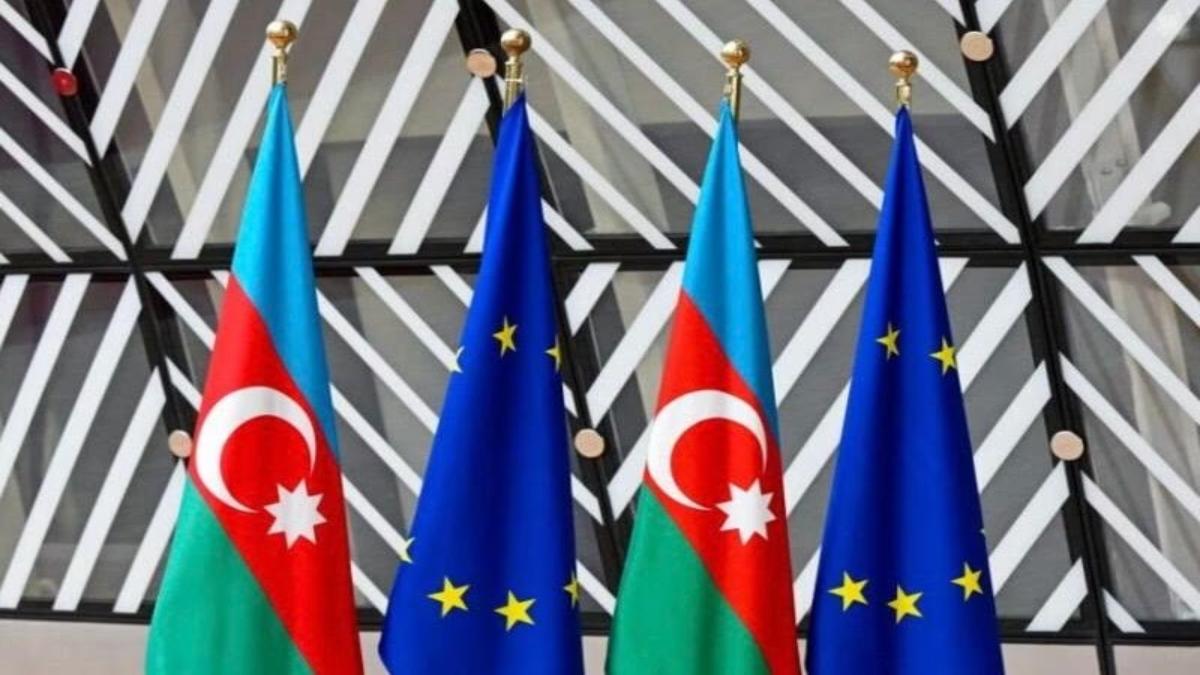
Azerbaijan's parliament, the Milli Majlis, the country's unicameral legislative body, voted on May 1 to suspend all cooperation with the European Parliament, opening the most serious institutional rupture between Baku and an EU body in recent years as the Karabakh file returns to European political debate.
The unanimous decision halts participation in the EU-Azerbaijan Parliamentary Cooperation Committee and starts withdrawal procedures from the Euronest Parliamentary Assembly. Azerbaijan's Foreign Ministry also summoned EU Ambassador Marijana Kujundzic and delivered a formal protest note.
The trigger was a European Parliament resolution dated April 28 and updated on April 29 under the title "Supporting Democratic Resilience in Armenia." The text did more than address Armenia's elections and institutional resilience. It welcomed the EU-Armenia security track, the EU Partnership Mission in Armenia and the European Peace Facility assistance to Armenian forces, while also reintroducing Karabakh through return, detainees and cultural heritage provisions.
The resolution calls for the "safe, unimpeded and dignified return" of Armenians who left Karabakh under "appropriate international guarantees," demands the "immediate and unconditional release" of Armenian detainees described as prisoners of war and hostages, and seeks accountability over alleged destruction of Armenian cultural heritage, including a UNESCO mission to the region.
Azerbaijan rejects that framing. Its authorities describe the detainees as individuals accused or convicted of war crimes and terrorism-related offences, and maintain that Armenians left Karabakh voluntarily after the 2023 military operation that restored Azerbaijani control over the territory.
"Unfortunately, the past 10 years have shown that the European Parliament is not willing to abandon its biased approach toward Azerbaijan," Speaker Sahiba Gafarova said.
The Milli Majlis decision said European Parliament platforms had turned into instruments of pressure, blackmail and interference in Azerbaijan's internal affairs. It also said the European Parliament had adopted more than ten "biased" resolutions against Azerbaijan since the 44-day war.
The dispute turns on the status of Karabakh after the 2023 war. Azerbaijan treats the territorial question as settled. The European Parliament's resolution keeps return, detainees and cultural heritage claims inside the political arena.
The timing sharpened the reaction in Baku. The resolution came amid renewed international attention on Armenian cultural sites in Stepanakert, following reports alleging damage to two churches, and after months of European pressure over detainees and post-conflict conditions.
The rupture also has precedent. Azerbaijan froze parliamentary ties with the European Parliament in 2015 after critical resolutions, and cooperation was restored in September 2016. The current move goes further because it starts a withdrawal track from Euronest, turning a protest into a more structural disengagement.
The vote comes less than a year after the August 8, 2025 Washington declaration, in which Azerbaijan, Armenia and the United States outlined a pathway toward a 17-article peace agreement. Azerbaijani officials have used that process to argue that the conflict has entered a post-war phase. The European Parliament's resolution moves in the opposite direction by keeping central elements of the dispute active inside EU institutions.
The political clash is unfolding alongside expanding energy ties. Azerbaijan exported about 12.5 billion cubic meters of gas to the European Union in 2025, up 53.8 percent since 2021 and equal to around 4 percent of total EU gas imports. Italy, Greece, Bulgaria, Austria and Germany remain among the main buyers. During a March 2026 visit to Baku, EU Energy Commissioner Dan Jørgensen described the partnership as an important backbone of European energy security.
The parliamentary freeze does not directly affect those contracts, but it exposes the split inside the broader EU-Azerbaijan relationship. Political pressure is rising through the European Parliament, while the Commission and member states continue to rely on Azerbaijani gas.
Azerbaijan treats the war as settled. The European Parliament's resolution treats key parts of it as unfinished. That gap produced the May 1 vote, and it leaves little reason to assume the rupture will remain confined to parliamentary channels.