
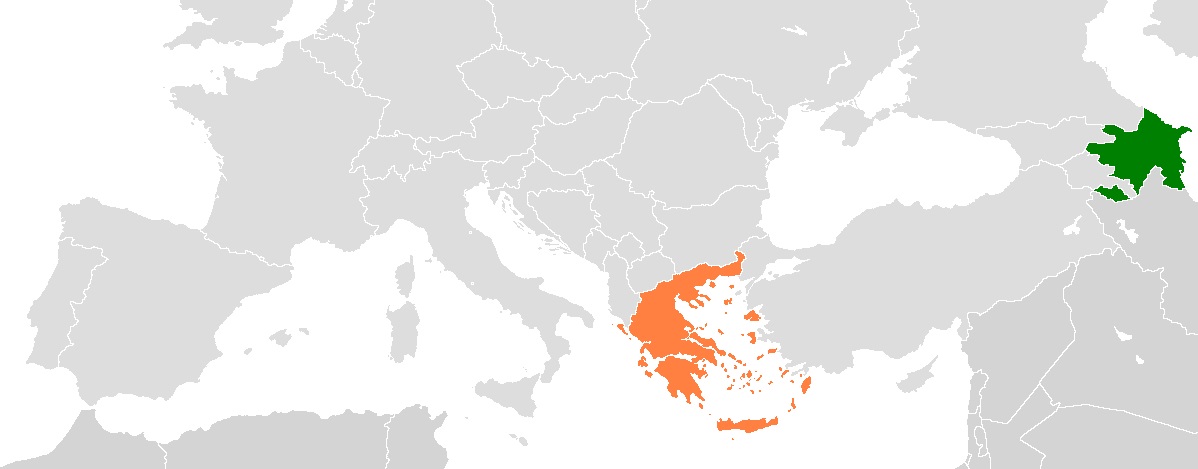
Azerbaijan and Greece have agreed to expand cooperation across a broad range of sectors, including economy, energy, trade, transport and tourism, as part of renewed efforts to strengthen bilateral and multilateral engagement.
According to official statements released following recent high-level contacts, both sides emphasized the importance of dialogue, institutional cooperation and regional stability, while highlighting shared interests in economic diversification, energy security and people-to-people ties.
Energy and trade ambitions
Energy cooperation featured prominently in discussions, reflecting Azerbaijan's role as a key supplier in wider regional energy architecture and Greece's position as an energy hub within the European Union. Officials pointed to opportunities for collaboration in infrastructure, logistics and downstream sectors, alongside expanding trade volumes and investment channels.
At the same time, both governments underlined the value of regional connectivity, particularly in transport and supply chains linking the South Caucasus, the Eastern Mediterranean and Europe.
The unavoidable Türkiye factor
Any serious discussion of regional connectivity, however, inevitably intersects with Türkiye. From energy corridors to transport routes and tourism flows, Türkiye remains the primary geographical and logistical bridge connecting the Caucasus to European and Mediterranean markets.
Existing pipelines, road and rail networks, aviation links and maritime routes already run predominantly through Türkiye, making it a central stakeholder—whether explicitly acknowledged or not—in initiatives aimed at boosting regional integration.
Analysts note that while bilateral cooperation between Azerbaijan and Greece can generate diplomatic and sector-specific gains, scalable and cost-effective regional projects are difficult to sustain without alignment with Türkiye's infrastructure and transit capacity.
Tourism and cultural outreach
Tourism and cultural exchange were also highlighted as areas of growth potential, with both sides expressing interest in increasing visitor flows, improving connectivity and encouraging cooperation between tourism institutions.
Here again, Türkiye's role as a major tourism hub and transit country shapes regional dynamics, particularly for multi-destination travel, cruise routes and air traffic between Europe, the Caucasus and the Middle East.
Strategic balance over symbolism
The emerging Azerbaijan–Greece dialogue reflects a broader trend of flexible regional diplomacy, where countries seek pragmatic partnerships without formal alliances. Yet regional experience suggests that symbolism alone cannot substitute for geography.
For Türkiye, the developments reinforce a familiar reality: regional cooperation frameworks tend to function best when they complement, rather than bypass, existing corridors and economic realities.
As the Eastern Mediterranean and South Caucasus continue to evolve amid global energy shifts and geopolitical uncertainty, initiatives that integrate rather than fragment regional networks are likely to prove the most durable.