
By Bosphorus News Geopolitics Desk
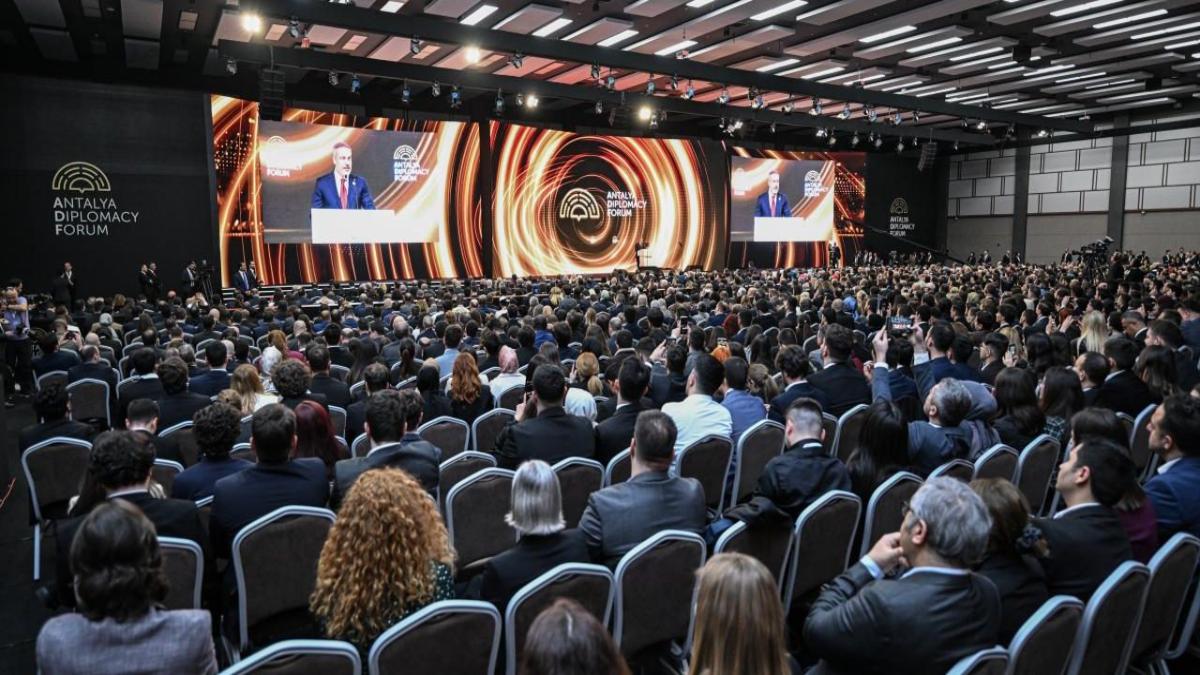
The Antalya Diplomacy Forum opens on April 17 under the auspices of President Recep Tayyip Erdoğan and the Ministry of Foreign Affairs, bringing a major diplomatic gathering to Türkiye while several regional crisis files remain unresolved. Organisers have set this year's theme as "Mapping Tomorrow, Managing Uncertainties."
Official forum materials indicate broad international participation, with more than 20 heads of state, over 50 foreign ministers and representatives from more than 150 countries expected in Antalya between April 17 and 19. That scale gives Ankara an active venue for face-to-face contacts as the Iran track, the Israel-Lebanon front and wider regional security questions continue to move at the same time.
According to the forum's official description, the gathering is designed not only around speeches and panels but also around bilateral contacts and direct political engagement. Organisers say the aim is to strengthen dialogue, restore trust and expand cooperation at a time of geopolitical fragmentation. In practice, that makes Antalya more than a conference site. It becomes one of the few places where rival or misaligned regional actors can still meet in the same setting.
Its diplomatic weight has increased further this week. Reuters reported on April 15 that Pakistan Prime Minister Shehbaz Sharif had begun a regional tour covering Saudi Arabia, Qatar and Türkiye. The same reporting pointed to an expected four-way meeting involving the foreign ministers of Türkiye, Pakistan, Saudi Arabia and Egypt on the margins of the forum. That places Antalya inside an active consultation channel linked to Iran and broader regional security concerns.
The forum also opens while Ankara is trying to keep mediation space alive. President Recep Tayyip Erdoğan said on April 15 that Türkiye was working to extend the current ceasefire and sustain negotiations, arguing that diplomacy cannot proceed while coercive pressure dominates events. That gives the Antalya meetings a sharper role. They are opening while the core disputes are still live, not after they have been contained.
This timing matters because the main regional files remain unstable. No formal extension of the current Iran-related ceasefire had been announced as of April 15, even as negotiations continued. At the same time, Israel's security cabinet was meeting to discuss the possibility of a ceasefire with Lebanon after the Washington talks, showing that diplomacy and military pressure were still moving in parallel.
Against that backdrop, Antalya is set to function as a live diplomatic junction rather than a ceremonial gathering. The forum may not produce a settlement on its own. But it will offer a clear test of whether Ankara can still assemble competing regional players in one place while several connected crises remain in motion.