
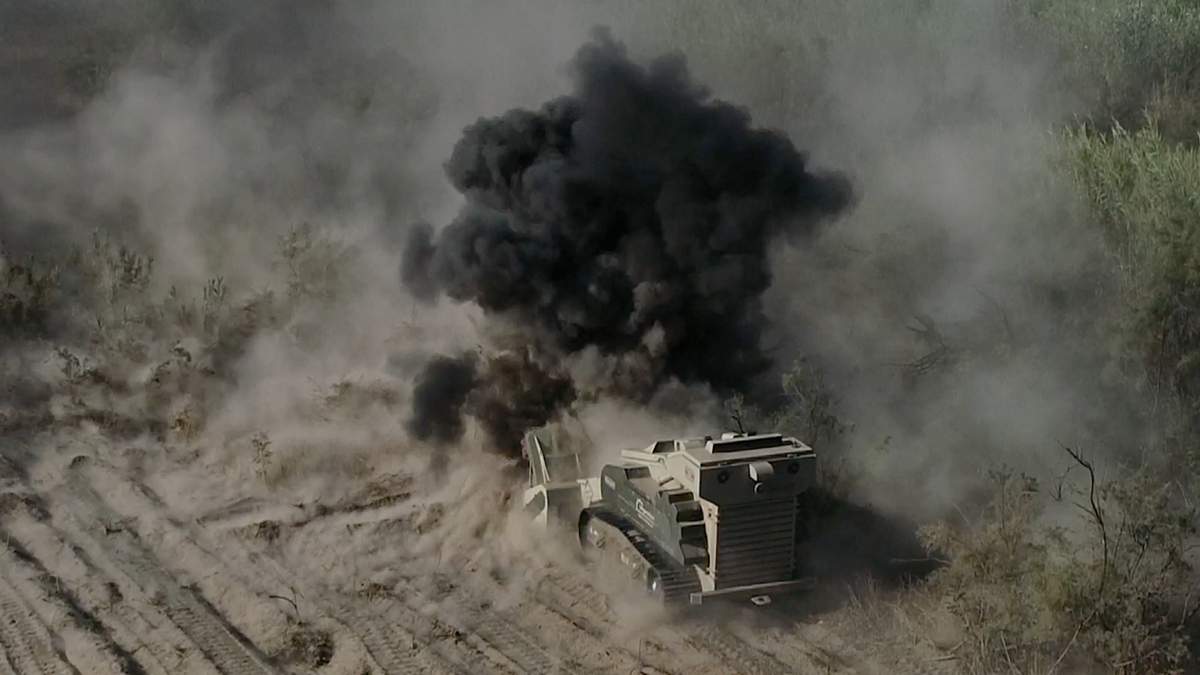
Azerbaijan's mine contamination problem remains one of the most persistent humanitarian and security challenges facing the country in the post-conflict period. Data released by the Azerbaijan National Agency for Mine Action, ANAMA, underlines both the scale of the threat and the slow, costly nature of recovery in territories liberated after the 2020 war.
According to ANAMA, a total of 6,824 landmines have been discovered and neutralised in liberated areas during ongoing clearance operations. These figures reflect only confirmed finds, underscoring the extent to which large swathes of territory remain unsafe for civilian return, infrastructure development, and agricultural use.
The human cost is equally stark. ANAMA officials report that 415 people have fallen victim to mine incidents since the end of the Patriotic War. These casualties include both civilians and personnel involved in post-war recovery efforts, highlighting how mine contamination continues to shape daily life long after active hostilities have ceased.
Demining as a prerequisite for reconstruction
Mine clearance has become a central precondition for Azerbaijan's broader reconstruction agenda in Karabakh and surrounding regions. Roads, residential zones, agricultural land, and energy infrastructure remain constrained by contamination, delaying the return of displaced populations and increasing reconstruction costs.
ANAMA's work combines manual clearance, mechanical demining, and technical survey methods, but officials have repeatedly warned that progress is measured in years rather than months. The density and irregular placement of mines further complicate efforts, particularly in areas where detailed minefield maps were never provided.
International cooperation enters a new phase
Against this backdrop, Azerbaijan has moved to expand international cooperation in humanitarian demining. Recent discussions between Azerbaijani officials and NATO focused on broadening cooperation in mine clearance, including training, technical support, and the possible use of advanced detection technologies.
The talks highlighted humanitarian demining as one of the most practical and politically neutral areas of engagement between Azerbaijan and NATO. Cooperation in this field builds on earlier trust fund projects and reflects a shared interest in reducing civilian harm while supporting post-conflict stabilisation.
While no formal timeline has been publicly announced, Azerbaijani officials have indicated that cooperation with NATO could help accelerate clearance efforts, particularly in high-risk zones critical for reconstruction and resettlement.
A long-term challenge with regional implications
The continued discovery of thousands of mines and the rising casualty figures underline a structural reality: mine contamination is not merely a legacy issue but an ongoing security and humanitarian concern. For Azerbaijan, the success of demining operations will shape not only the pace of reconstruction but also the credibility of post-war normalisation.
ANAMA's figures serve as a reminder that the end of active conflict does not mark the end of risk. In the absence of comprehensive clearance and sustained international support, landmines will continue to impose costs measured not only in time and money, but in lives.