
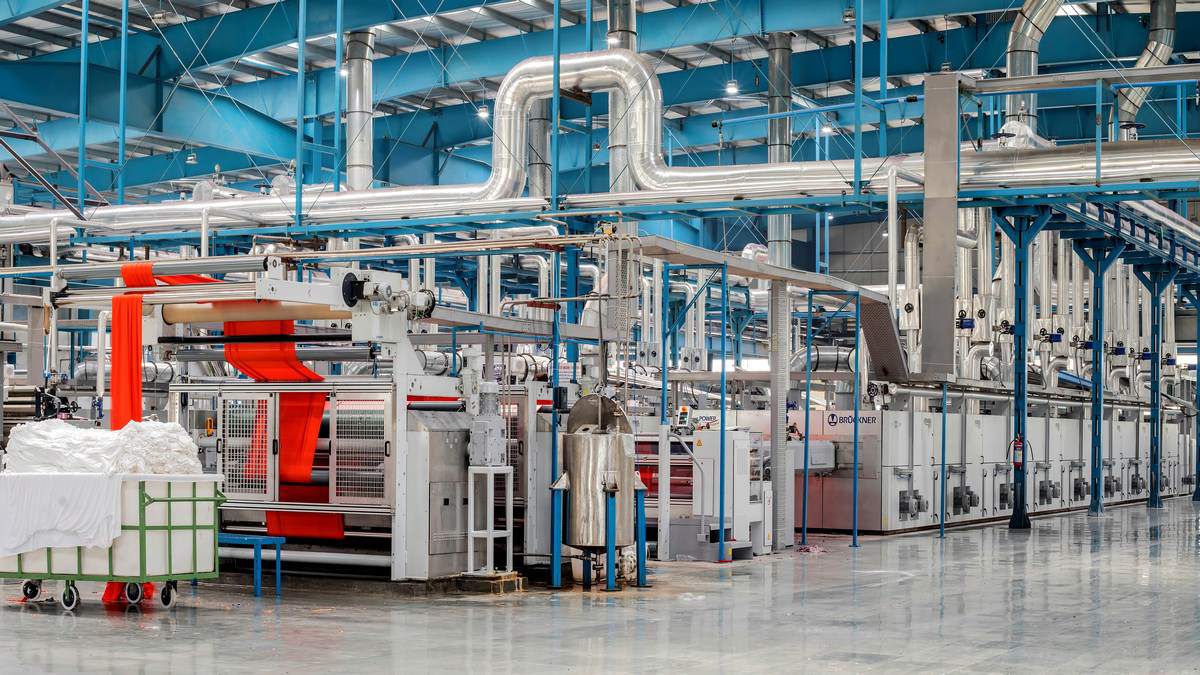
Türkiye's industrial trajectory no longer suffers from a lack of ambition, but from a failure to convert ambition into structural change. After more than two decades under uninterrupted rule by the Justice and Development Party (AKP), the central question is no longer whether industry expands, but whether it advances. On this front, the pattern is consistent. Expansion has been sustained. Upgrading has not.
Growth Has Outpaced Change
Production volumes have increased, export capacity has widened, and manufacturing remains a core pillar of economic activity. Yet these gains have not altered the composition of industry in a meaningful way. Medium- and low-technology segments continue to dominate, anchoring growth in scale rather than capability. Public resources have largely reinforced output and capacity utilisation, while technological deepening and productivity gains have remained secondary. The result is an economy that produces more without becoming materially more resilient or technologically embedded.
Scale Without Shift
Capacity has expanded faster than competence. Firms have learned to operate efficiently within existing structures, but few have been compelled to move beyond them. Investment patterns reflect this equilibrium. Capital continues to flow toward established sectors, while technology-intensive transformation proceeds unevenly and at the margins. Growth has been accommodated. Structural movement has been deferred.
Policy That Keeps Things Running
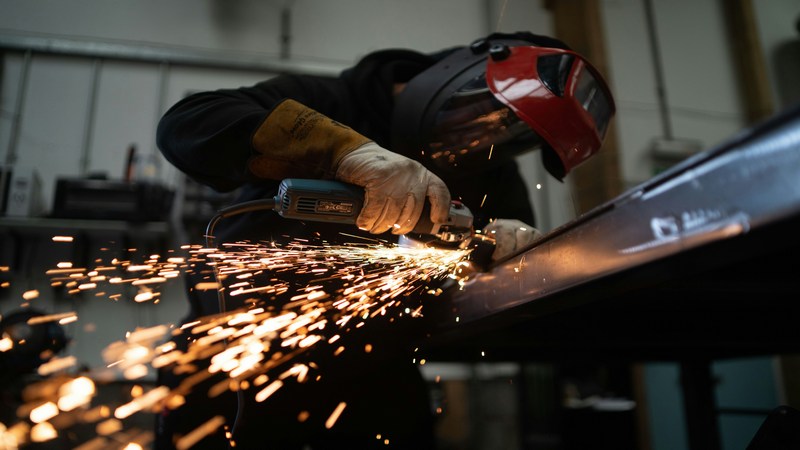
The constraint is not the absence of industrial policy, but its reluctance to prioritise. Support mechanisms are spread across sectors, regions, and firm sizes, often with the aim of cushioning pressure rather than enforcing transition. Budgetary choices favour continuity, while instruments designed to push upgrading remain fragmented and limited in scale. Short-term stability is preserved. Strategic direction is diluted.
When Upgrading Remains Optional
Without binding priorities, industrial policy functions as a stabilising tool rather than a transformative one. Performance thresholds are weak, exit mechanisms rare, and incentives seldom conditional on technological progress. Upgrading is encouraged rhetorically but remains optional in practice. Growth cycles repeat, while the industrial structure largely endures.
Innovation Without Industrial Gravity
Technology policy follows the same logic. Research capacity has expanded and innovation features prominently in official language, yet industrial outcomes remain narrow. High-technology exports account for a limited share of total output, commercialisation is uneven, and globally competitive platforms remain scarce. Public spending on research and innovation is dispersed across programmes, reducing its capacity to reshape production at scale.
The Missing Link Between Knowledge and Production
Interaction between universities and industry exists, but it remains episodic and weakly institutionalised. Technology transfer mechanisms lack permanence, and research incentives are insufficiently aligned with industrial demand. As long as innovation is not structurally tied to manufacturing decisions, it stays adjacent to production rather than embedded within it.
Stability as a Substitute for Capability
These dynamics are most visible among small and medium-sized enterprises (SMEs), which form the backbone of Türkiye's industrial base. Much of the SME segment has been approached through a lens of preservation rather than transformation. Access to long-term finance, skills upgrading, and technology absorption remains constrained, while support schemes prioritise survival over capability building. Pressure is eased. Trajectories remain unchanged.
Two Paths Inside One Industrial Base
Over time, this has produced a bifurcated structure. A narrower group of firms, typically larger and better integrated into global value chains, has adapted, digitalised, and partially upgraded. A broader base has relied on cost control and incremental adjustment. This divergence reflects not market failure, but policy choices that consistently avoided concentration and selectivity.
Transitions Acknowledged, Alignment Delayed
Green and digital transitions expose the same hesitation. Both are recognised as unavoidable, yet resource allocation, regulatory clarity, and institutional coordination lag behind stated intent. Environmental and digital objectives appear in policy frameworks, but implementation capacity remains uneven. Adjustment is delayed rather than shaped.
Direction Deferred, Costs Accumulating
Delay carries a cost. As external standards tighten, particularly in key export markets, adaptation becomes more abrupt and more expensive. What could have been managed gradually increasingly risks being imposed under pressure, narrowing room for manoeuvre.
What emerges is not industrial failure, but sustained strategic indecision. Türkiye continues to produce, export, and invest, yet fundamental questions remain unresolved. Which segments are expected to move up the value chain. Which are merely being sustained. Which are implicitly being allowed to fall behind.
Türkiye's industrial future is unlikely to be shaped by targets or strategy documents alone. What will matter is whether policy signals begin to carry weight over time through consistency, follow-through, and consequences that firms can read and respond to. So far, those signals remain uneven.
Industrial upgrading rarely unfolds evenly across an economy. Some activities move ahead, others stall, and some are gradually displaced. The question is not whether this will happen, but whether it happens by design or by default. For now, Türkiye's industrial base continues to expand, without a clear sense of where that expansion is meant to lead.