
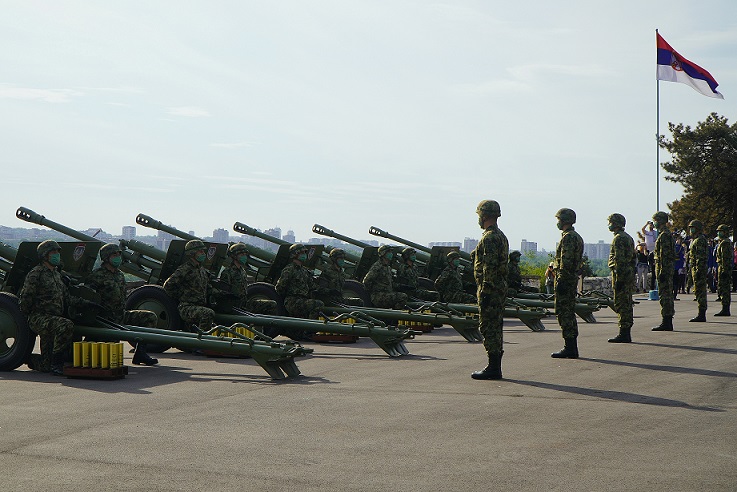
A gradual but increasingly visible shift is taking shape across the Western Balkans, where governments are expanding defence budgets and accelerating military modernisation in response to evolving regional and global security conditions. Rather than signalling an imminent confrontation, the trend reflects a strategic recalibration driven by uncertainty, deterrence needs, and lessons drawn from recent conflicts in Europe.
Rising Defence Budgets and Modernisation Efforts
Over the past several years, defence spending has risen across much of the region. Serbia has continued to allocate greater resources to its armed forces, with a focus on air defence, unmanned systems, and overall force readiness. Croatia and Albania, both NATO members, have also increased defence outlays, prioritising interoperability, air capabilities, and modern equipment aligned with alliance standards.
Smaller Balkan states are following a similar, though more measured, path. Investments tend to focus on upgrading command structures, training, and basic deterrence capabilities rather than large-scale force expansion. Across the region, the emphasis is increasingly on quality, readiness, and technological adaptation rather than numerical strength.
Lessons from Ukraine and Shifting Security Perceptions
Security analysts widely agree that the war in Ukraine has played a decisive role in reshaping defence thinking in Southeast Europe. The conflict has highlighted vulnerabilities in air defence, logistics, and surveillance, prompting governments to reassess preparedness and response capacity.
At the same time, renewed geopolitical competition among major powers has sharpened strategic awareness in the Balkans — a region historically sensitive to changes in the broader European balance of power. These dynamics have encouraged closer defence cooperation, joint training initiatives, and greater alignment with international security frameworks.
Deterrence Without Escalation
Despite the visible rise in military investment, regional governments have been careful in their messaging. Official statements consistently frame defence modernisation as defensive, precautionary, and stabilising, rather than confrontational. Political leaders emphasise that strengthened deterrence is intended to reduce risk, not increase it.
Parallel to military upgrades, there is continued emphasis on diplomacy, confidence-building measures, and dialogue. Regional and international actors alike stress that miscalculation — rather than intent — poses the greatest threat to long-term stability in the Balkans.
Türkiye's Regional Perspective
For Türkiye, which maintains deep historical, political, and economic ties across the Balkans, these developments are closely monitored. Ankara has repeatedly underlined that sustainable security in Southeast Europe cannot rely on military capacity alone. Instead, it requires inclusive political processes, economic interdependence, and respect for international norms.
Turkish officials have consistently advocated for balance: supporting regional resilience while avoiding steps that could deepen divisions or fuel arms-driven competition.
A Region Adapting to a More Uncertain Era
What is emerging in the Balkans is not a classic arms race, but a cautious adjustment to a more volatile security environment. Defence capabilities are expanding, yet political rhetoric continues to stress stability and cooperation. How effectively this balance is maintained will play a significant role in shaping the region's security trajectory in the years ahead.
***Further Reading:
This article is based on a summarized reading of a comprehensive analysis by IBNAEU. Readers seeking deeper insight into defence spending trends, power shifts, and geopolitical imbalances in the Balkans can access the full IBNAEU analysis here: