
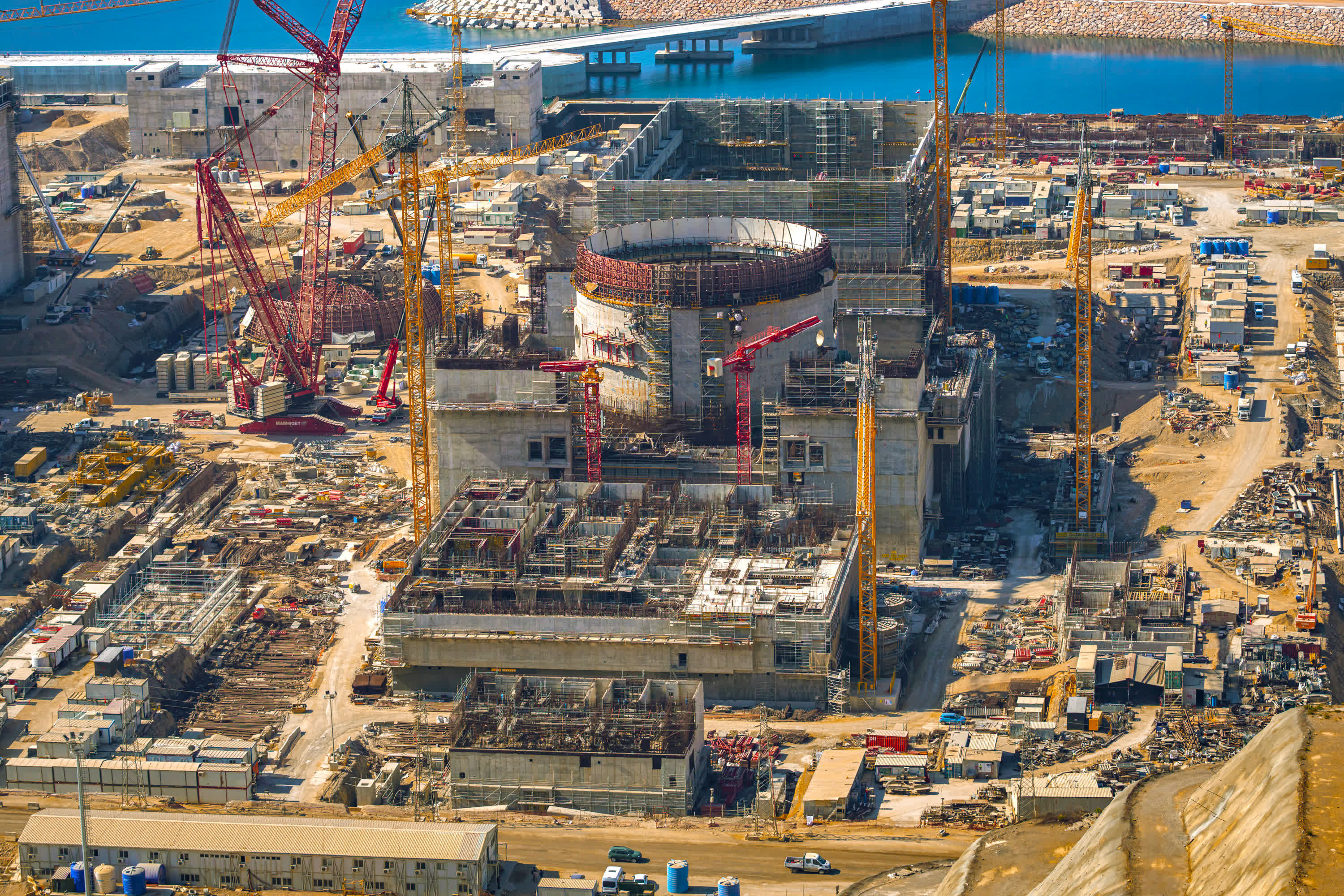
Türkiye's Energy and Natural Resources Minister Alparslan Bayraktar has confirmed that Russia has provided approximately $9 billion in new financing for the Akkuyu Nuclear Power Plant, describing the move as a critical step in sustaining momentum on one of Türkiye's most strategic energy projects.
Speaking publicly on the issue, Bayraktar said the financing was arranged through Russia's state nuclear corporation Rosatom, which is constructing and operating the plant under a build-own-operate model.
"Russia has provided new financing of around $9 billion for Akkuyu," Bayraktar said. "This funding supports the continuation of construction and ensures that the project proceeds according to schedule."
Keeping Akkuyu on Track
The minister emphasized that the financing is aimed at covering construction costs and maintaining cash flow amid global economic pressures and tightening international financial conditions. He underlined that Akkuyu is not a short-term investment, but a long-term strategic infrastructure project central to Türkiye's energy security.
"Akkuyu is a project that will serve Türkiye for decades," Bayraktar noted. "Once fully operational, it will significantly reduce our dependence on imported energy and contribute to price stability."
The four-reactor plant, once completed, is expected to meet roughly 10 percent of Türkiye's electricity demand, marking the country's entry into civilian nuclear energy generation.
A Strategic Project Despite Global Tensions
Bayraktar rejected suggestions that geopolitical tensions or sanctions-related concerns could derail the project, stressing that Akkuyu is being implemented within a clear legal and contractual framework agreed by both sides.
"This is an intergovernmental agreement-based project," he said. "It is proceeding in line with international law and Türkiye's national interests."
Russian officials, for their part, have consistently described Akkuyu as a flagship example of long-term energy cooperation with Türkiye.
Economic and Energy Implications
Energy analysts note that the new financing reduces immediate fiscal pressure on Ankara at a time when global capital markets remain volatile. By relying on project-based external financing, Türkiye avoids direct budgetary strain while advancing a high-cost, high-impact energy investment.
Beyond electricity generation, Akkuyu is also expected to:
- create thousands of jobs during construction and operation,
- contribute to technology transfer and workforce training,
- and diversify Türkiye's energy mix away from fossil fuels.
Domestic Debate Continues
While the government frames Akkuyu as an energy-security milestone, the project continues to face scrutiny from opposition parties and civil society groups, which raise concerns about environmental risks, cost transparency, and long-term dependency structures.
Bayraktar has responded to such criticism by pointing to international safety standards and regulatory oversight.
"Akkuyu is being built according to the highest nuclear safety criteria," he said. "Türkiye's institutions are fully involved in oversight and regulation."
The Bigger Picture
With the latest financing secured, Ankara appears determined to push ahead with Akkuyu as planned. The project remains a cornerstone of Türkiye's broader strategy to balance energy security, economic resilience, and long-term supply stability.
As Bayraktar put it:
"This is not just an energy project. It is a strategic investment in Türkiye's future."