
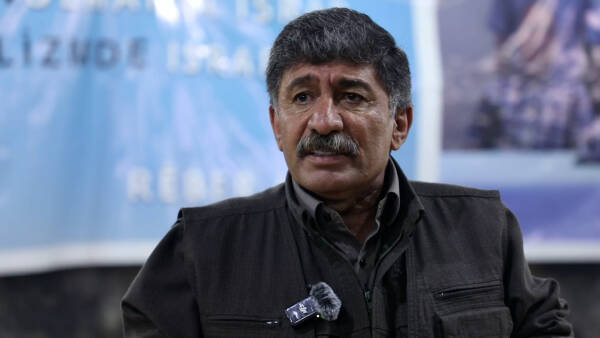
The fragile peace initiative aimed at resolving Türkiye's four-decade-long conflict with Kurdish militants has slammed into a wall of unfulfilled expectations. A senior executive of the Kurdistan Workers' Party (PKK) has formally declared that the movement has completed its obligations and is now waiting for Ankara to deliver concrete political reciprocity.
Speaking from the mountainous Qandil region, PKK executive Amed Malazgirt delivered a sharp challenge to the Turkish state, stating that the political ball now rests entirely in Ankara's court.
"All the steps the leader Apo [Abdullah Öcalan] has initiated have been implemented," Malazgirt asserted, emphasizing that the era of one-sided goodwill gestures is over. "There will be no further actions taken [by our side]. From now on, we will be waiting for the Turkish state, and they have to be the one taking steps."
This critical assessment, reported by Rudaw and ANF News, underscores the existential crisis facing the renewed peace talks.
The Two Non-Negotiable Demands
According to Malazgirt, the PKK's demands are clear and non-negotiable, positioning them as the foundation upon which any lasting political solution must be built:
- The Freedom of Abdullah Öcalan: Malazgirt stressed that Öcalan's release from his life sentence on İmralı Island is paramount, declaring: "without this, the process will not succeed." The PKK views its imprisoned founder not merely as a leader, but as the essential political broker whose physical freedom is necessary to guarantee the process and fully transition the movement.
- Constitutional Recognition: The second demand is the "constitutional and official recognition of the Kurdish people in Turkey," ensuring a legal and political foundation for democratic rights and cultural identity.
A Year of Unilateral Compliance
The PKK's hard-line stance follows nearly a year of extraordinary unilateral de-escalation, a process that began with Öcalan's call for peace in February 2025. Over the course of the year, the group took historic, measured steps:
- Formal Dissolution: The organization formally renounced its armed struggle and declared its decision to dissolve its organizational structure in May 2025.
- Symbolic Disarmament: This was followed by a public, symbolic burning of weapons in July, signaling a commitment to ending the armed campaign.
- Full Withdrawal: By late October, the group confirmed it had withdrawn its armed forces from Turkish territory into northern Iraq.
While the Turkish government recently acknowledged the gravity of the moment by allowing a cross-party parliamentary commission to visit Öcalan—a significant and historic diplomatic move—Malazgirt argues that administrative dialogue is insufficient. For the PKK, the core issue is the lack of a legal framework that guarantees democratic rights and protects those who have disarmed, leaving the peace process precariously dependent on executive political will rather than institutional safeguards.
The current deadlock effectively forces Türkiye's ruling coalition to confront the most sensitive issue in the conflict: whether the price of a permanent peace includes the release of the man they have imprisoned for over two decades. Until that reciprocity is delivered, the fragile ceasefire remains a unilateral gamble, threatening to unravel the most significant push for resolution in a decade.