
A "Physical Symbol" of Permanence
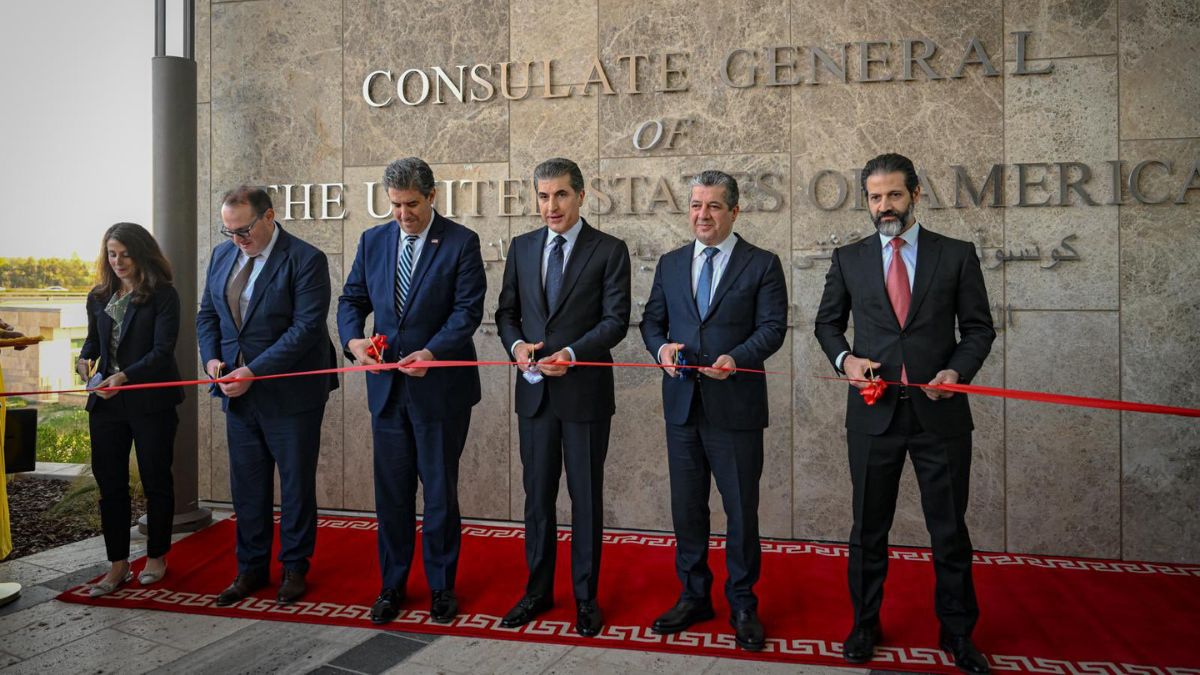
The United States has officially inaugurated its new diplomatic compound in Erbil, the capital of the Kurdistan Region of Iraq (KRI). The sheer scale of the project effectively ends years of speculation regarding American withdrawal from the region.
Constructed over seven years with a budget nearing $800 million, the facility spans a staggering 206,000 square meters (51 acres). To put that in perspective, it is a fortified micro-city larger than many embassies, designed to operate self-sufficiently if necessary.
Leading the inauguration, US Deputy Secretary of State for Management and Resources, Michael Rigas, stripped away diplomatic ambiguity. He termed the building a "physical symbol" of the United States' long-term partnership with the Kurdish people, asserting that the investment is a "testament" to Washington's enduring strategic interests in Iraq.
"Rising Like a Mountain"
For the Kurdish leadership, the consulate is more than just offices; it is a security guarantee cast in concrete. The opening comes amid a volatile security landscape, with frequent threats from regional militias.
In a poetic yet politically charged speech, Kurdistan Regional Government (KRG) Prime Minister Masrour Barzani hailed the structure's imposing presence.
Prime Minister Masrour Barzani stated: "This building is rising like a mountain, a solid and unshakable rock in Erbil... it is a testament to the old, strong bond between the United States and the people of Kurdistan."
KRI President Nechirvan Barzani echoed this, calling the facility a "clear political message" that the US relationship with Erbil is built on deep, strategic foundations rather than temporary convenience.
Inside the Fortress
The new complex, located on the Erbil-Shaqlawa road, replaces the cramped facilities in the Ankawa district. It is built to withstand the unique challenges of the region:
- Self-Sufficiency: The compound features its own power generation capabilities and an advanced water-recycling system, crucial in a region facing chronic infrastructure gaps.
- Sustainability: It incorporates extensive solar power arrays, expected to generate roughly 15% of the facility's energy needs.
- Capacity: It is designed to house hundreds of staff, including Marines and diplomatic personnel, effectively functioning as a secure American enclave.
Strategic Timing
The ribbon-cutting happens at a critical juncture. With Iran-aligned militias continuing to pressure US forces and local energy infrastructure, the consulate serves as a hardened hub for intelligence and security coordination.
US officials used the opening to reiterate calls for stability, urging continued cooperation between Baghdad and Erbil to dismantle destabilizing militia groups. By planting its largest consular flag in the world here, Washington has signaled that Erbil is not just an outpost, but a central pillar of its Middle East strategy for decades to come.